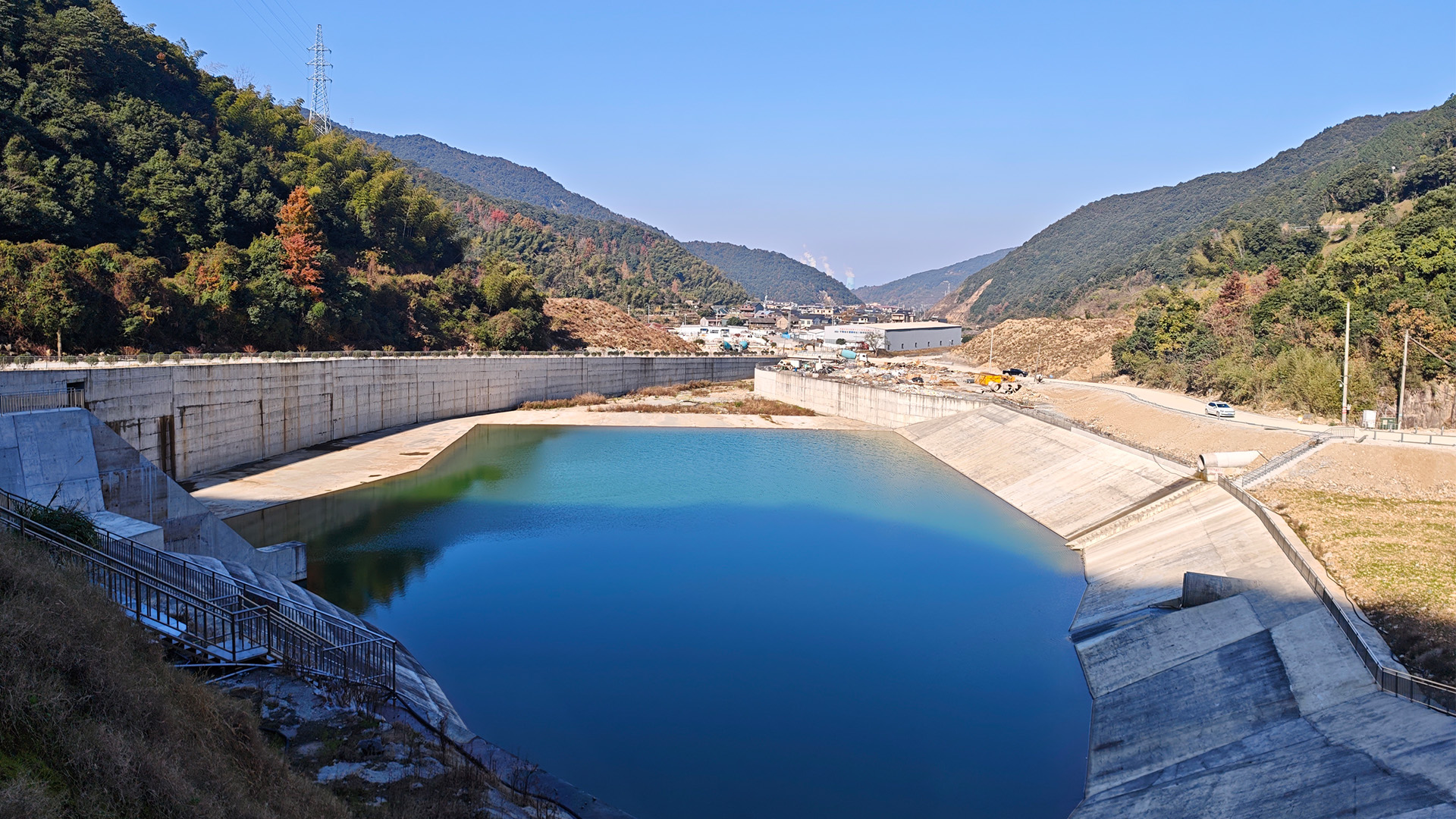
The recent inauguration of the Zhejiang Province's first large-scale pumped storage power station in China also marks an important step on the journey towards more renewable energy. A step proudly supported by AVK.
In the face of the severe challenges posed by global climate change, accelerating the development of renewable energy has become a global consensus. Pumped storage represents the most technologically mature, economically optimal, and viable option for large-scale development as a low-carbon, clean, and flexible power regulation source within the power system, holding significant strategic importance and vast development prospects.
In 2016, the Chinese government explicitly proposed to prioritise the advancement of key projects in eight major energy sectors, among which pumped storage hydropower technology drew considerable attention. In 2018, the construction of the Zhejiang Province's first large-scale pumped storage project – the Ninghai pumped storage power station – was officially commenced. The station was finally inaugurated and put into use in May 2025.
A giant power bank for East China’s grid
Constructed over a period of seven years and with a total investment of approximately CNY 7 billion, the Ninghai power station is a mega project with a total installed capacity of 1.4 million kilowatts. Now in operation, the power station provides a bidirectional power regulation capacity of 2.8 million kilowatts, undertaking core functions such as peak shaving, frequency modulation, phase modulation, and energy storage for the Zhejiang power grid.
Additionally, the station provides reliable peak shaving support to neighbouring provinces and cities, including Shanghai. The station is expected to save 180,000 tons of standard coal and reduce annual CO2 emissions by 360,000 tons. As a result, the station will increase the proportion of clean energy connected to Ningbo's grid from 6.87% to 7.37%
From environmental protection to extreme operating conditions
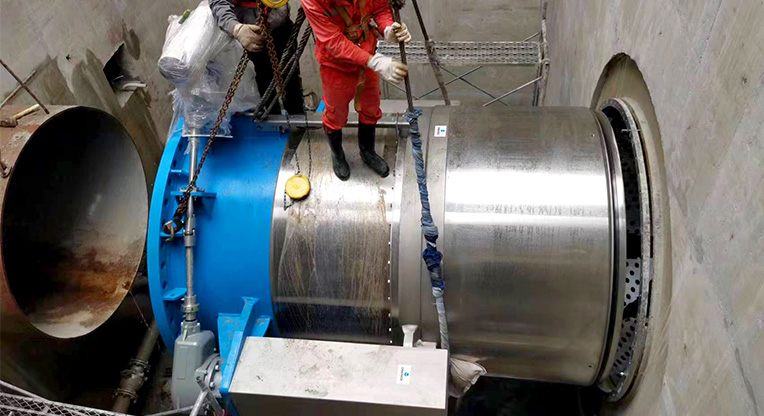
To meet the stringent requirements of energy projects under China’s dual carbon goals (carbon emissions peaking before 2030, and neutrality by 2060), the Ninghai station has set rigorous standards for the reliability and environmental adaptability of its core equipment. Leveraging its global expertise and advanced local manufacturing capabilities, AVK has offered a tailored solution to address the dual needs of ecological discharge control and auxiliary flood relief at the station's lower reservoir. The solution includes large-diameter submerged fixed cone valves (DN2000) along with a supporting flow monitoring system.
AVK's cone valves achieve stable operation under high-flow-velocity and high-head (160 m design head) conditions through fluid dynamics simulation and precise computational verification, while also possessing accurate flow regulation capabilities. Additionally, these valves feature the functions of dynamic water opening/closing and partial opening, enabling flexible responses to varying discharge flow requirements.
Designed for long-term operation
In the project, the outlet of the lower reservoir discharge tunnel is relatively close to residential areas. At the outlet, a submerged flow discharge method is adopted. The AVK submerged fixed cone valve is equipped with a specially designed flow guide hood and an air make-up device, which effectively mitigate the risks of cavitation and water flow erosion, ensuring safe operation of the equipment throughout its entire service life.
As the core equipment safeguard for the Ninghai station, AVK valves provide crucial support for the safe and stable operation, thereby contributing to the continuous development of sustainable energy production. Tailored to the needs of different applications and scenarios, AVK is continuously innovating to offer efficient, stable, and high-quality valve solutions, actively serving the national energy transition strategy.